Lithium Zones: Sacrifice, Production and Profit
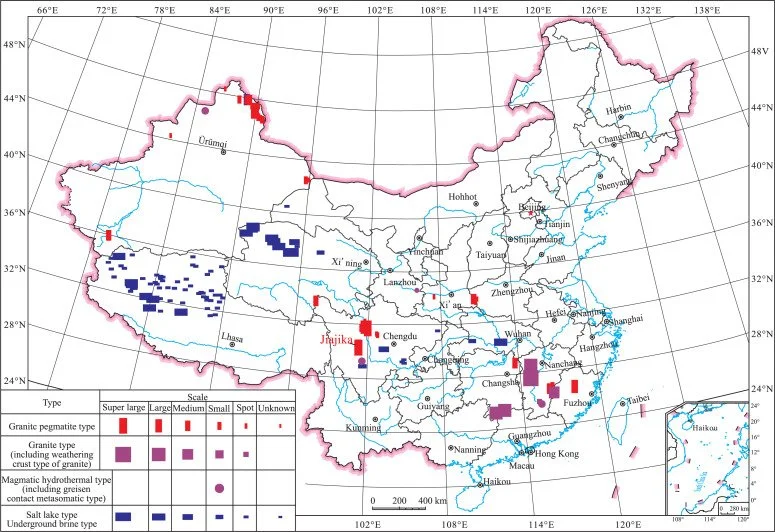
In Lithium Zones, I investigate the discourses that shape the cultural politics of lithium (Li) in sites and spaces around the world: in Latin America, its site of origin and extraction; in China, its site of production; and in the developed world where consumption coexists with discourse about renewable energy and clean transitions. I critically examine cultural narratives found in the communities where exploitation is taking place but also in corporate and governmental discourse, (as well as those found in fiction: short stories, poetry, as well as documentary film) to reveal, on the one hand, the pressures that are put on this mineral to afford us a presumably clean future, and on the other, the material realities of continued structural inequality and environmental damage of lithium use.
Lithium, the main component of electric lithium-ion batteries, is usually presented as a key mineral which will play a vital role in the world’s decarbonization and reduction of greenhouse gases (GHG). However, a growing scientific corpus documents the complex cycle of destruction that must take place to extract, process and produce lithium-ion batteries. These multiple dynamics should prompt us to critically analyze “green” and technoutopian discourses that present lithium as a fundamental component of a “clean energy” panacea narrative.
The goal of this geography but interdisciplinary project is to understand our relationship with this mineral and its usage in the capitalist chain of production and consumption. My final objective is to present a comparative understanding of narratives emerging from different countries and continents to better apprehend our complex and contradictory desires and our drives and habits in an age of crisis, consumption and derangement.
Subject and Rationale of Project
Lithium Zones explores the network of cultural narratives by organizing them in three geographical zones. I use the theoretical categories of “zones” to better understand the overlapping fields of poverty and death but also power, privilege, and profit that are created by the new rush to obtain and utilize this critical mineral.
I will analyze how narratives originating from extraction sites in the salt flatlands of South America portray the mining of lithium as a negative force that destroys habitats and spheres of life. These narratives stress the sacrificial aspect of zones adjudicated for lithium extraction through evaporation, a process that draws down the water available to Indigenous farmers and herders. My aim is to understand the way in which the relative recent lithium boom is experienced and interpreted by the dwelling communities (which are the groups most affected by this process) and by the writers, filmmakers and other cultural industry professionals who produce and disseminate the narratives of dispossession but also narratives of excesses produced by political corruption and the surplus of wealth derived from indiscriminate mineral extraction.
Secondly, I will discuss the impacts of the lithium rush on East Asian countries and particularly on the bodies of the Chinese migrant workers who are employed in mineral processing and batteries manufacturing plants and are subjected to human rights abuses and substandard working conditions. I will discuss the poetry as well as short stories and novellas produced by Chinese writers which explore the problems of environmental despoliation in industrial sites, as well as the destruction of human life in mining and processing sites.
Thirdly, I will explore how lithium is presented in the industrializedwestern and emerging countries: I will conduct a discourse analysis of narratives from governments, non-governmental organizations, the electric vehicle (EV) manufacturing industry and other related actors to detect patterns and contradictions vis-à-vis the logic of utilizing lithium towards advancing a transition to “cleaner” sources of energies.
My final objective is to engage in critique and comparison of the emerging narratives that arise: narratives of extraction and destruction of forms of life in sacrificial zones in Latin America, narratives of industrial exploitation and environmental destruction in East Asia, and narratives of and dreams of ethical consumption in the global North. I am interested in placing these narratives in a productive tension to understand the conditions or possibilities that enable the reproduction of the promise of lithium in the global North. My project aims to understand our contradictory relation with this mineral and the logic of capitalist accumulation that designates zones of sacrifice and death in order to create and sustain zones of benefit and profit.
This project will be an original contribution to the field of cultural geography and fill a gap in understanding the interface of lithium, and capital in the operating system of the modern world. At present there is a body of research that has recorded the damage and social displacement. However, there is no sustained analysis of the narratives, discourses and visual texts produced about the encounter between lithium, human bodies and the technology-driven planetary machine of accumulation and consumption that we call capitalism.